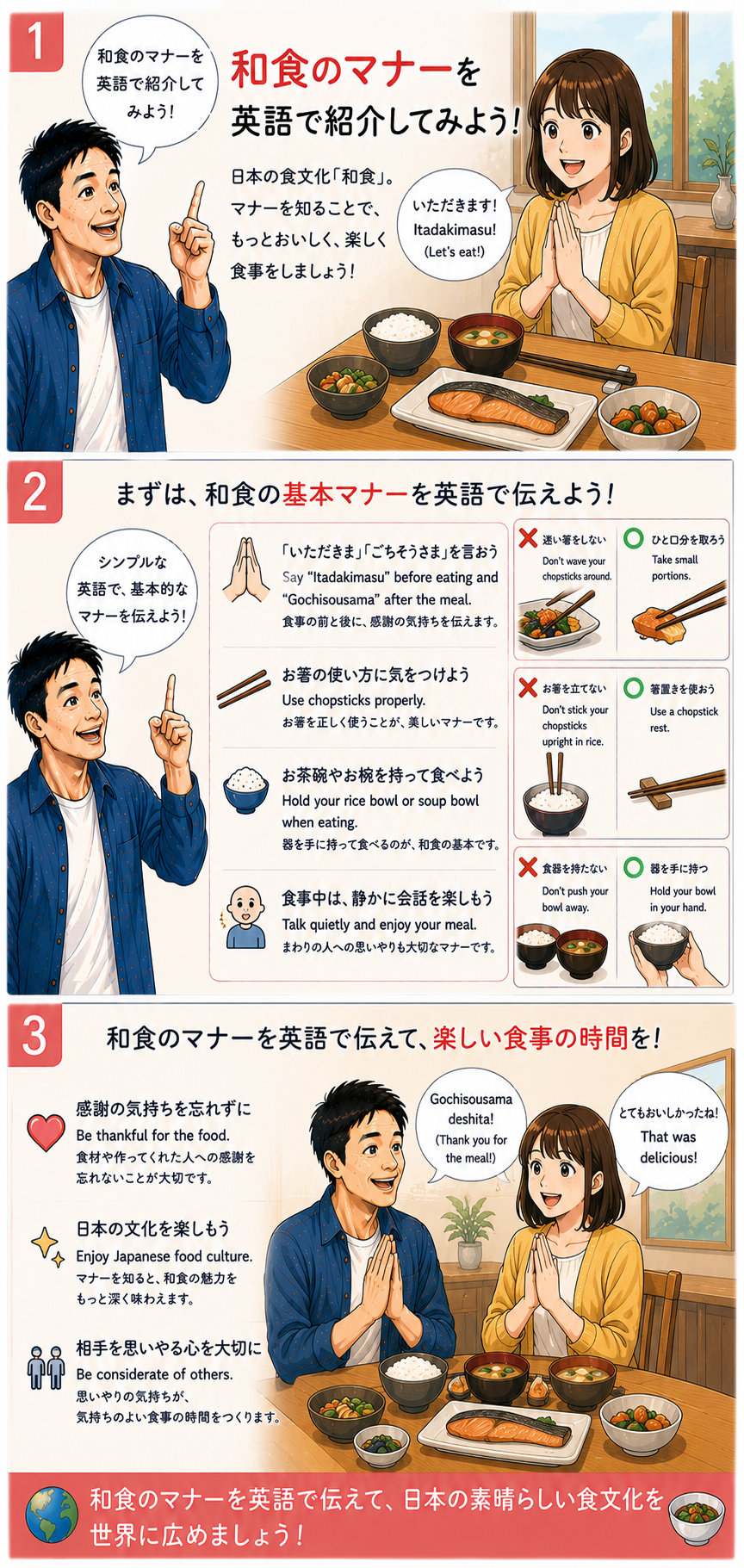

「日本人はみんな箸を使えるの?」と外国人講師に聞かれて、当たり前すぎて答えに詰まったことはありませんか? 英語で語ると意外と奥が深いお箸文化のポイントを整理します。
“Chopsticks” の英語表現
箸は英語で “chopsticks” ですが、語源は中国語です。
“The word ‘chopsticks’ comes from Chinese pidgin English. The Japanese word is ‘hashi.'”
中国・韓国・日本の箸の違い
“Chinese chopsticks are long and blunt for sharing food. Korean chopsticks are flat metal, historically used by royalty. Japanese chopsticks are shorter and pointed for eating fish.”
- 中国の箸:長くて先が丸い(取り分け用)
- 韓国の箸:平らで金属製(王族由来)
- 日本の箸:短くて先が尖る(魚用)
東アジア3国で形が違う事実は、講師の知的好奇心をかき立てます。
「My箸」と3歳からの練習
“Many Japanese families have personal chopsticks. Children start learning to use them around age 3, with special training chopsticks for kids.”
家族一人ひとりが専用の箸を持ち、3歳から練習する習慣は海外講師には新鮮です。
「割り箸」のマナー
割り箸は disposable chopsticks または “wari-bashi”。
“When you split wari-bashi, do it gently in front of you, not high above the table.”
「割り箸を高く上げて割らない」のも、繊細な日本のマナーです。
箸置きと神聖な道具としての箸
“There are small holders called ‘hashi-oki’ for resting chopsticks. In Japan, chopsticks are not just tools — they’ve been used in religious ceremonies, connecting people, food, and the gods.”
箸置き(hashi-oki)、そして「箸は神様と人をつなぐ神聖な道具」という概念は、日本文化の深さを伝えるのに最適です。次は出汁文化を紹介します。
コメント