
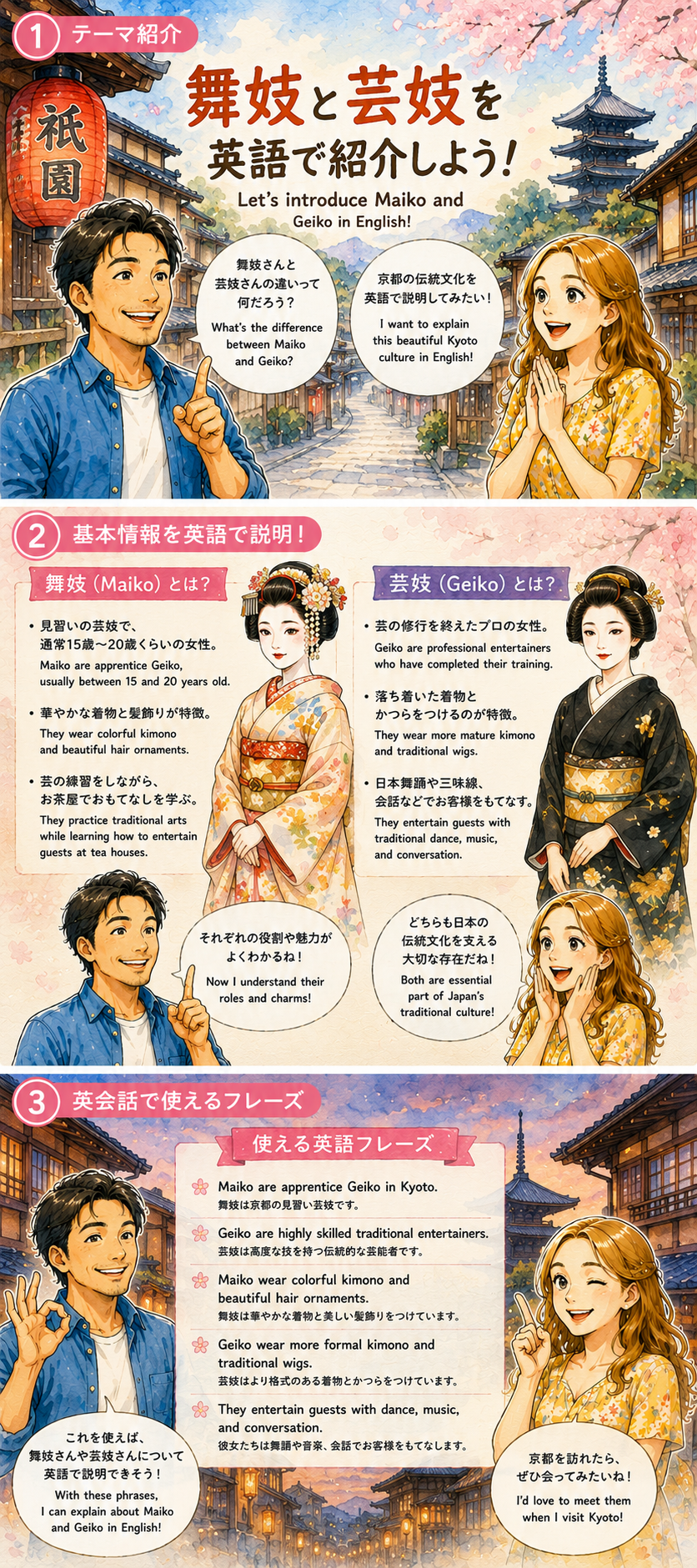
「京都で見たい伝統文化は?」と聞かれて、必ず話題に上るのが 舞妓(maiko) と 芸妓(geiko) です。世界的に有名ですが、その実態は知られていない部分が多いです。今回は英語で語るポイントを整理します。
“Geisha” は実は東京の呼び方
驚かれることが多いですが、京都では「ゲイシャ」とは呼びません。
“In Tokyo, they’re called ‘geisha.’ But in Kyoto — the heart of this tradition — they’re called ‘geiko.’ ‘Maiko’ are young apprentices learning to become geiko.”
「ゲイシャ=東京、ゲイコ=京都」という違いは、ほぼ全ての海外講師が知りません。
※日本語では「舞妓」「舞子」どちらの表記も使われますが、英語ではどちらも maiko です。「芸妓」は京都読みで geiko、東京の「芸者」は geisha。指す職業は同じで、地域による呼び方の違いです。
“Maiko” と “Geiko” の違い
| 項目 | 舞妓(Maiko) | 芸妓(Geiko) |
|---|---|---|
| 年齢 | 15〜20歳 | 20歳以上 |
| 髪型 | 自髪を結う | カツラ |
| 化粧 | 派手な口紅 | 控えめな化粧 |
| 着物 | 長いだらりの帯 | 短いお太鼓結び |
“Maiko are apprentices, usually 15 to 20 years old. They have elaborate hairstyles and bright makeup. Geiko are full professionals, age 20 and older, with more refined elegance.”
“Geisha” とは何ではないか
海外では「Geisha = sex worker」という誤解が根強く存在します。これは絶対に訂正したい誤解です。
“Important to know: Geiko and Maiko are NOT prostitutes. They are highly trained artists — masters of dance, traditional music, conversation, and tea ceremony.”
「芸術家(artists)」という言葉が、最も適切です。
舞妓と花魁は別物 — 誤解はここから来ている
「geisha = 性を売る仕事」という誤解が消えないのは、花魁(oiran) と混同されているからです。ここを分けて説明すると、話が一気に通じます。
Oiran were high-ranking courtesans in the licensed districts of the Edo period. Geiko are performing artists. They are not the same profession.
(花魁は江戸時代の遊郭にいた高位の遊女です。芸妓は芸を売る職業で、まったく別の仕事です。)
見分け方もあります。花魁は帯を前で結び、舞妓・芸妓は後ろで結びます。写真を見せながらこの一点を伝えると、違いが視覚的に伝わります。
The easiest way to tell them apart: oiran tie the obi in front, maiko tie it in back.
(見分け方は簡単です。花魁は帯を前で、舞妓は後ろで結びます。)
遊郭の制度は戦後に廃止されました。現在「花魁体験」として残っているのは写真撮影のプランで、これがさらに混同を招いています。
5〜6年の厳しい修行と京都の5つの花街
“Becoming a geiko takes 5 to 6 years of strict training. Maiko live in a special house called ‘okiya’ and study Japanese arts every day.”
“Kyoto has five ‘hanamachi’ or geisha districts: Gion Kobu, Gion Higashi, Pontocho, Kamishichiken, and Miyagawacho. Gion Kobu is the most famous.”
「修行(strict training)」という単語と、特に有名な 祇園(Gion) の名前を覚えておくと深い知識として伝わります。
舞妓に会える場所とマナー
“If you want to see real maiko, walk in Gion in the early evening — around 5 to 6 PM. They commute to their evening engagements. But please don’t chase them or block their path.”
“If you want a closer experience, there are ‘maiko makeover’ studios where tourists can dress up like a maiko, get the makeup, and take photos.”
「夕方の祇園で見られる」「追いかけない」「舞妓体験という方法もある」という情報をセットで伝えると親切です。
舞妓を尊重する
“Real maiko and geiko are not tourist attractions. They are working professionals carrying on a 300-year tradition. Treat them with respect.”
「観光資源ではなく、伝統を守る職業人」というメッセージで締めると、深い印象を残せます。次はお茶文化を紹介します。
FAQ — 海外の人によく聞かれること
Q1. 舞妓さんの写真は撮っていい?
祇園の一部の私道では撮影が禁止されており、案内板が出ています。公道でも、追いかけたり進路をふさいだりするのは避けてください。
Photography is banned on some private streets in Gion — look for the signs. Never chase or block them.
(祇園の一部の私道は撮影禁止です。案内板を見てください。追いかけたり進路をふさいだりしないこと。)
Q2. 舞妓さんは何歳から?
一般的に中学卒業後、15〜16歳で置屋に入ります。約5年の修業を経て20歳前後で芸妓になります。
Most start around 15 or 16, right after junior high school.
(多くは中学を出た15〜16歳ごろに始めます。)
Q3. 観光客でもお座敷に呼べる?
お茶屋には「一見さんお断り」の慣習がありますが、現在はホテルや旅行会社が用意するプランを通じて体験できる場合があります。
Traditionally you need an introduction, but some hotels and tour operators now arrange it.
(本来は紹介が必要ですが、いまはホテルや旅行会社が手配してくれる場合があります。)
京都の伝統文化をまとめて語れるように、関連する記事もどうぞ。
- 祇園祭を英語で説明する — 花街と同じ「祇園」の名を持つ祭り
- 茶道を英語で語る — 舞妓が学ぶ芸のひとつ
- 京都と東京の違い — geiko と geisha の呼び分けの背景
- 日本の祭りを英語で — 伝統文化の全体像
コメント