
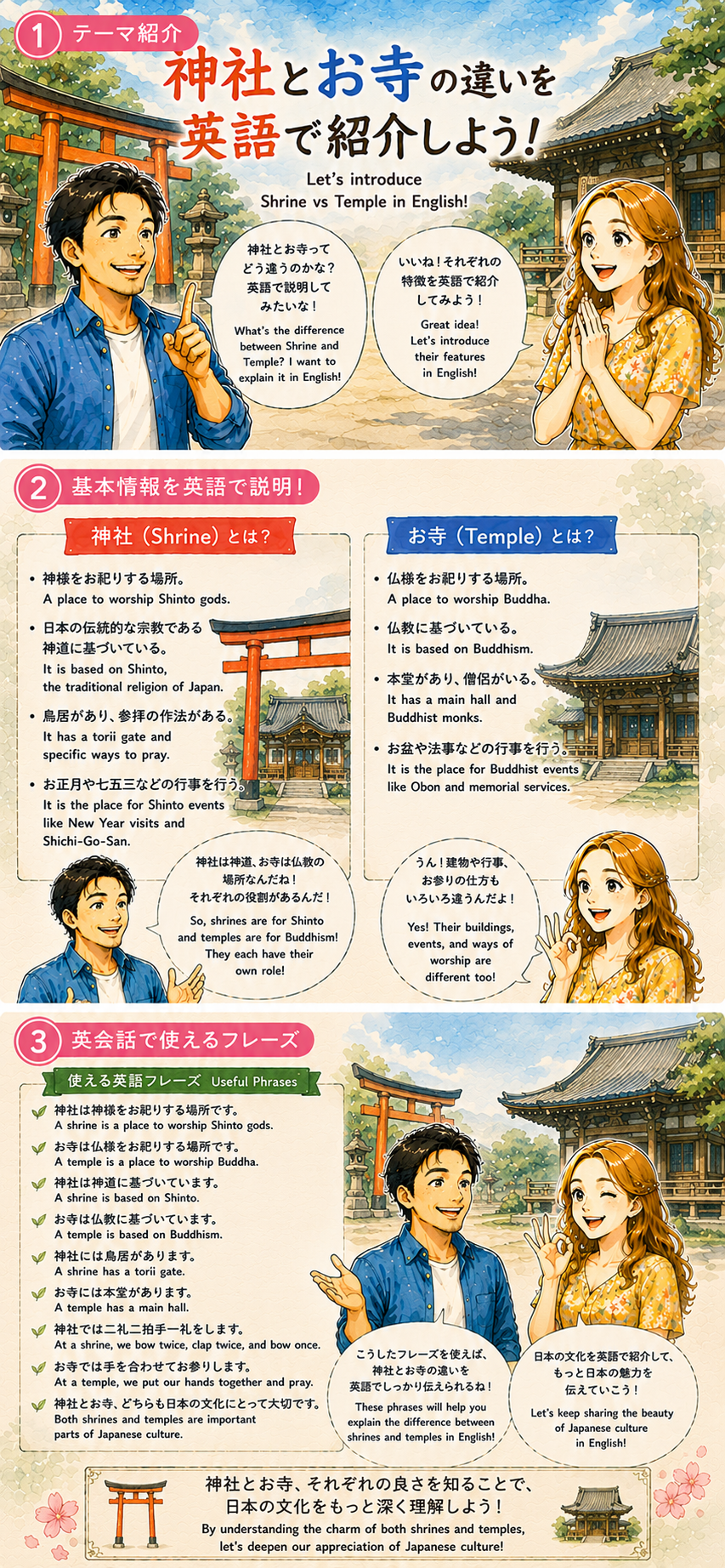
日本に来る外国人観光客が 必ず最初に混乱するのが「神社とお寺の違い」。見た目も似ているし、両方とも「神聖な場所」。でも実は まったく別の宗教施設 です。英語でスッキリ説明できれば、旅行者にとっての救世主になれます。
一文で説明するなら
“Shrines are for Shinto, temples are for Buddhism. Shinto is Japan’s native religion, while Buddhism came from India via China and Korea.”
これが最強の一行説明。Shinto = 神道、Buddhism = 仏教 という対応を覚えるのが第一歩です。
見分け方は「入口」
| 項目 | 神社 (Shrine) | お寺 (Temple) |
|---|---|---|
| 入口 | 鳥居 (Torii gate) | 山門 (Sanmon gate) |
| 神様 | カミ (Kami) | 仏 (Buddha) |
| 参拝方法 | 二礼二拍手一礼 | 合掌のみ(拍手なし) |
| 線香 | なし | あり |
| お墓 | なし | あり |
“If you see a torii gate — those iconic red or wooden gates — it’s a shrine. If you see a big wooden gate with statues guarding it, it’s usually a temple.”
参拝マナーの最大の違い
神社では 「拍手する」 が、お寺では 「拍手しない」。
“At shrines, you bow twice, clap twice, then bow once. At temples, you just put your hands together quietly — no clapping.”
これを知らずに お寺で拍手して恥をかく外国人観光客は多い ので、教えてあげると感謝されます。

八百万の神という世界観
“Shinto has millions of kami — gods of mountains, rivers, trees, even toilets. Buddhism has Buddha and various bodhisattvas.”
「トイレの神様もいる」という話は海外で大ウケします。映画『千と千尋の神隠し』に出てくる「八百万の神」の世界観です。
有名な例と名前ルール
- 明治神宮 (Meiji Jingu Shrine) / 伏見稲荷大社 (Fushimi Inari Shrine) — 神社
- 浅草寺 (Senso-ji Temple) / 金閣寺 (Kinkaku-ji Temple) — お寺
“The suffix ‘-jingu’ or ‘-jinja’ means shrine; ‘-ji’ or ‘-tera’ means temple.”
「-ji で終わるのがお寺、-jingu/-jinja で終わるのが神社」 という名前ルールも、英語講師に教えると喜ばれる雑学です。
共存している不思議
“Many Japanese people visit shrines for New Year’s, get married at Christian-style chapels, and have funerals at Buddhist temples. We mix religions in daily life.”
「初詣は神社、結婚式は教会、葬式はお寺」という日本独特の宗教観は、海外講師との会話で必ず盛り上がります。「Shrine vs Temple」は外国人観光客が 最も知りたい日本の知識。説明できると即座に旅のヒーローになれます。
コメント