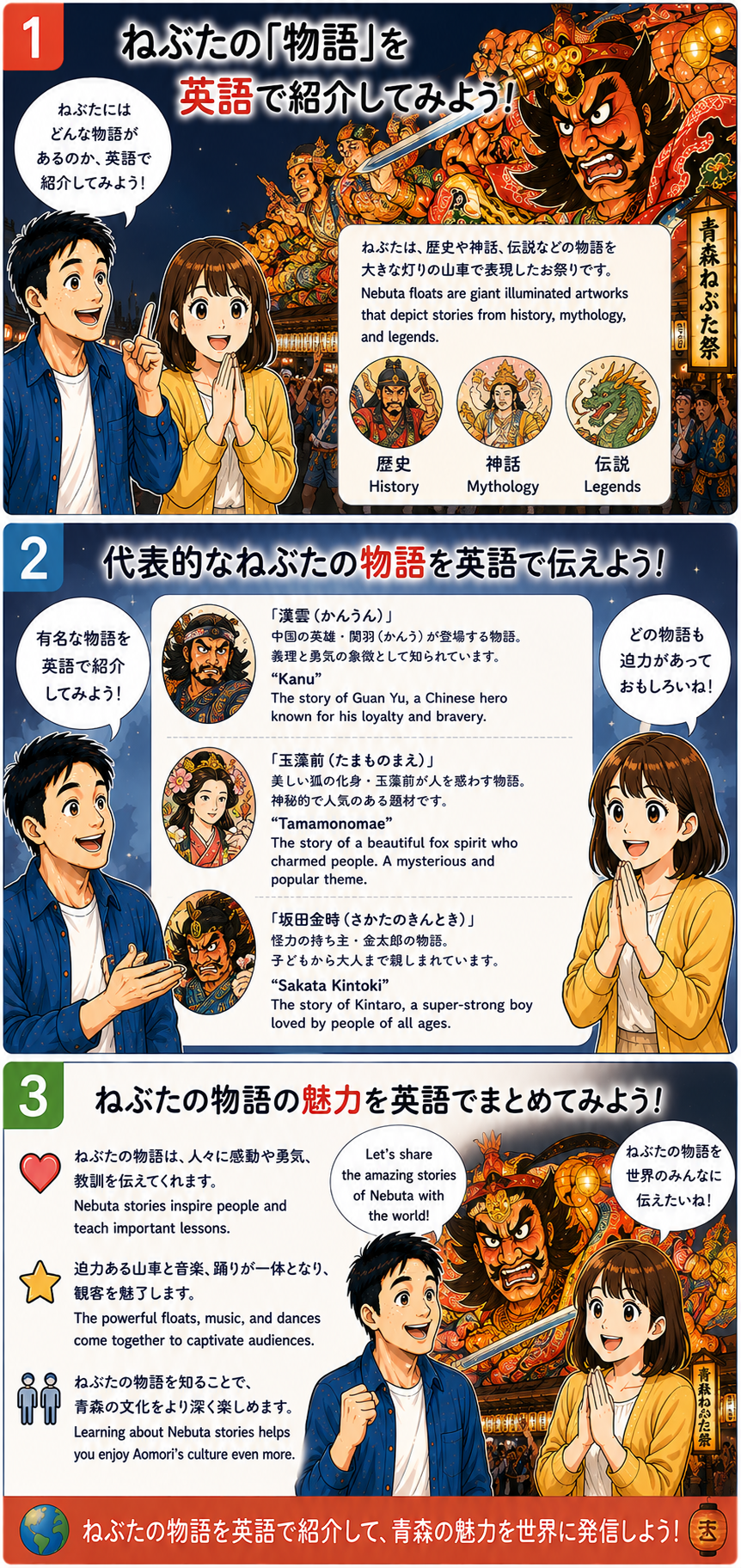
「ねぶたの絵って、何が描かれているの?」と聞かれたとき、答えられますか? 実はねぶたの題材は 日本の物語そのもの。神話、歌舞伎、三国志まで、語れる物語は無数にあります。英語で伝えるためのポイントを整理します。
ねぶたは「動く絵巻物」
“Each Nebuta float tells a story. Most designs come from Japanese mythology, kabuki plays, or historical legends — like a giant scroll painting brought to life.”
「scroll painting(絵巻物)が動き出した姿」という比喩は、海外講師に一発で伝わります。
一番人気は「ヤマタノオロチ」
最も有名な題材は、スサノオがヤマタノオロチを退治する場面(Susanoo vs Yamata no Orochi)。八つの頭を持つ大蛇との戦いです。
“One of the most popular themes is Susanoo defeating Yamata no Orochi — an eight-headed serpent. It’s one of the oldest myths from the Kojiki, Japan’s oldest book.”
『古事記』の話だと伝えると、講師は「Game of Thronesみたいだね」と必ず食いついてきます。

武者・歌舞伎・三国志
題材は神話だけではありません。
| 題材 | 英語表現 |
|---|---|
| 武者 | warrior / samurai |
| 歌舞伎の登場人物 | kabuki characters |
| 三国志(中国の歴史小説) | Romance of the Three Kingdoms |
| 水滸伝 | Water Margin |
| 大河ドラマの主人公 | hero from NHK’s annual historical drama |
“Some floats feature characters from Chinese classics like Romance of the Three Kingdoms, while others depict heroes from NHK’s annual Taiga Drama series.”
三国志は海外でも超人気。「日本のお祭りで三国志のキャラが登場する」という事実は意外性があって盛り上がります。
表と裏に違う絵
ねぶたは正面の 「鏡絵(kagami-e)」 と背面の 「見送り絵(miokuri-e)」 で違う場面を描きます。
“Each float actually has two sides — the ‘kagami-e’ on the front shows a battle scene, while the ‘miokuri-e’ on the back often shows a peaceful or sorrowful scene. It’s like reading two pages of a story at once.”
「戦いの場面」と「見送る人の場面」を対比させる、ねぶたの奥深い演出です。
英会話フレーズ
- Each float tells a story — 1台ごとに物語があります
- The themes come from myths and history — 題材は神話と歴史から来ています
- Susanoo vs the eight-headed serpent is a classic theme — スサノオ vs 八岐大蛇は定番の題材です
ねぶたを「ただの大きな提灯」ではなく「動く絵巻物」として語れば、海外講師の反応は劇的に変わります。
コメント