
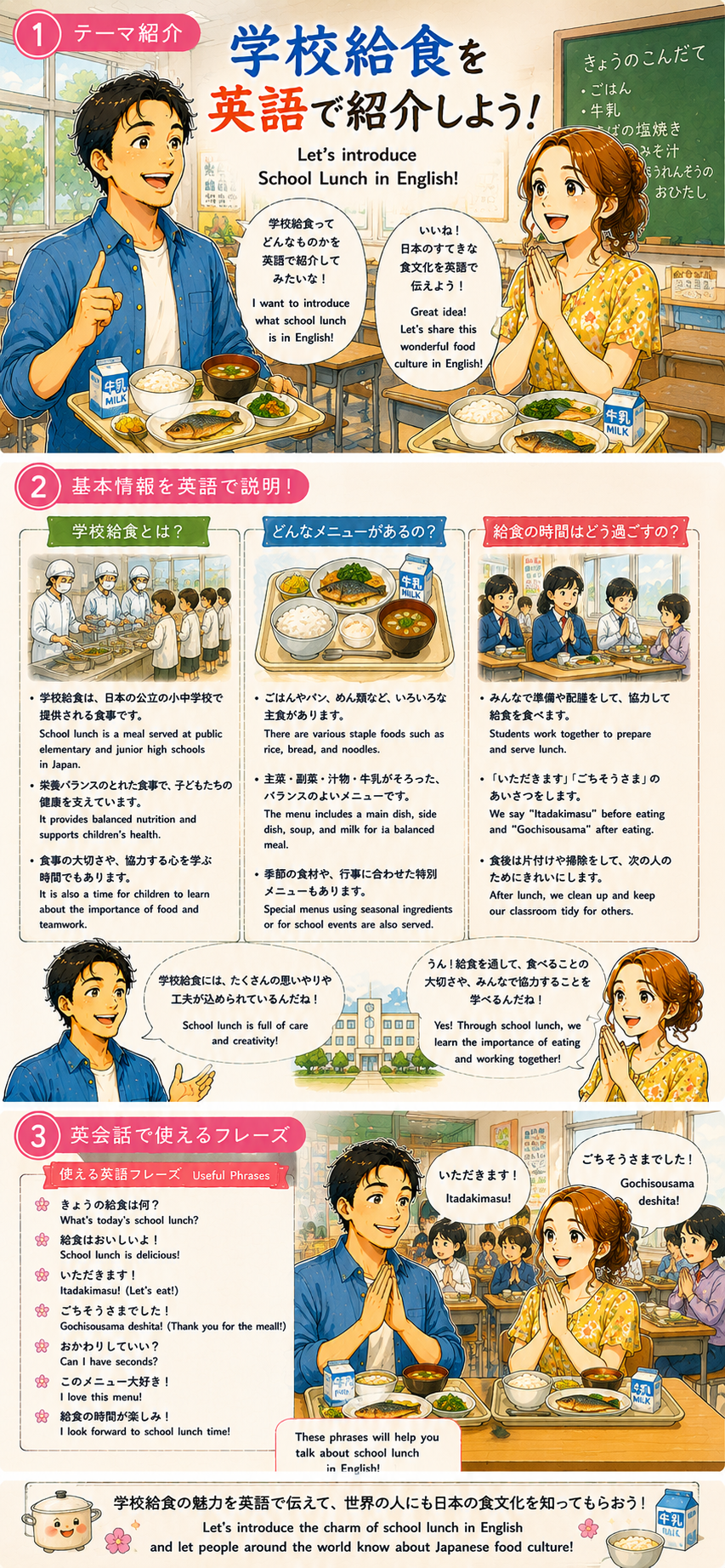
実は世界中の教育関係者が研究しているのが 日本の給食(kyushoku)。「子供が自ら配膳し、栄養士が献立を組み、食を通じて学ぶ」というシステムは、世界一進んだ食育プログラムとして注目されています。英語で語れば、海外講師との会話は教育論にまで発展します。
「Kyushoku」は1日250円の小さな奇跡
“Japanese school lunch — called ‘kyushoku’ — costs only about 250 yen per meal, including a balanced menu of rice, soup, fish or meat, vegetables, and milk.”
130年の歴史
“School lunch in Japan started in 1889 in Yamagata Prefecture — for poor children who couldn’t afford lunch. After WWII, it spread nationwide as a way to combat malnutrition.”
「1889年、貧しい子供を救うために始まった」 という起源は感動的なストーリーです。
子供たち自身が配膳
“The unique part is that students serve the food themselves. Each day, 6-8 students wear white aprons and caps and serve their classmates. This builds responsibility and respect for food.”
食育(Shokuiku)の三要素
| 要素 | 英語 | 内容 |
|---|---|---|
| 栄養 | nutrition | 栄養士が完璧にバランス |
| マナー | manners | いただきます/ごちそうさま |
| 感謝 | gratitude | 食材・農家への感謝 |
“Japan’s school lunch teaches three things: nutrition, manners, and gratitude. We call this ‘shokuiku’ — food education.”

海外でも注目
“American food activist Michael Pollan, British chef Jamie Oliver, and many documentaries have praised Japan’s school lunch as a global model.”
「Michael Pollan、Jamie Oliverが絶賛」 という具体名は説得力を高めます。
給食後の掃除と「いただきます」
“After eating, students don’t just leave. They clean the classroom and hallways themselves. There are no janitors at most Japanese schools — kids do it.”
“Before eating, everyone says ‘itadakimasu’ — expressing gratitude to farmers, cooks, and the food itself.”
「掃除も子供が自分でやる」「いただきます=thanks to the food itself」という解釈は奥深さを示せます。
英会話で使えるフレーズ
- Kyushoku is Japan’s school lunch system — 給食は日本の学校給食制度です
- Students serve the food themselves — 子供たち自身が配膳します
- It costs about 250 yen per meal — 1食約250円です
「School Lunch」は日本の教育哲学を象徴するテーマ。データと文化の両面から語れば、海外講師との会話は深い教育論へと発展します。

コメント