
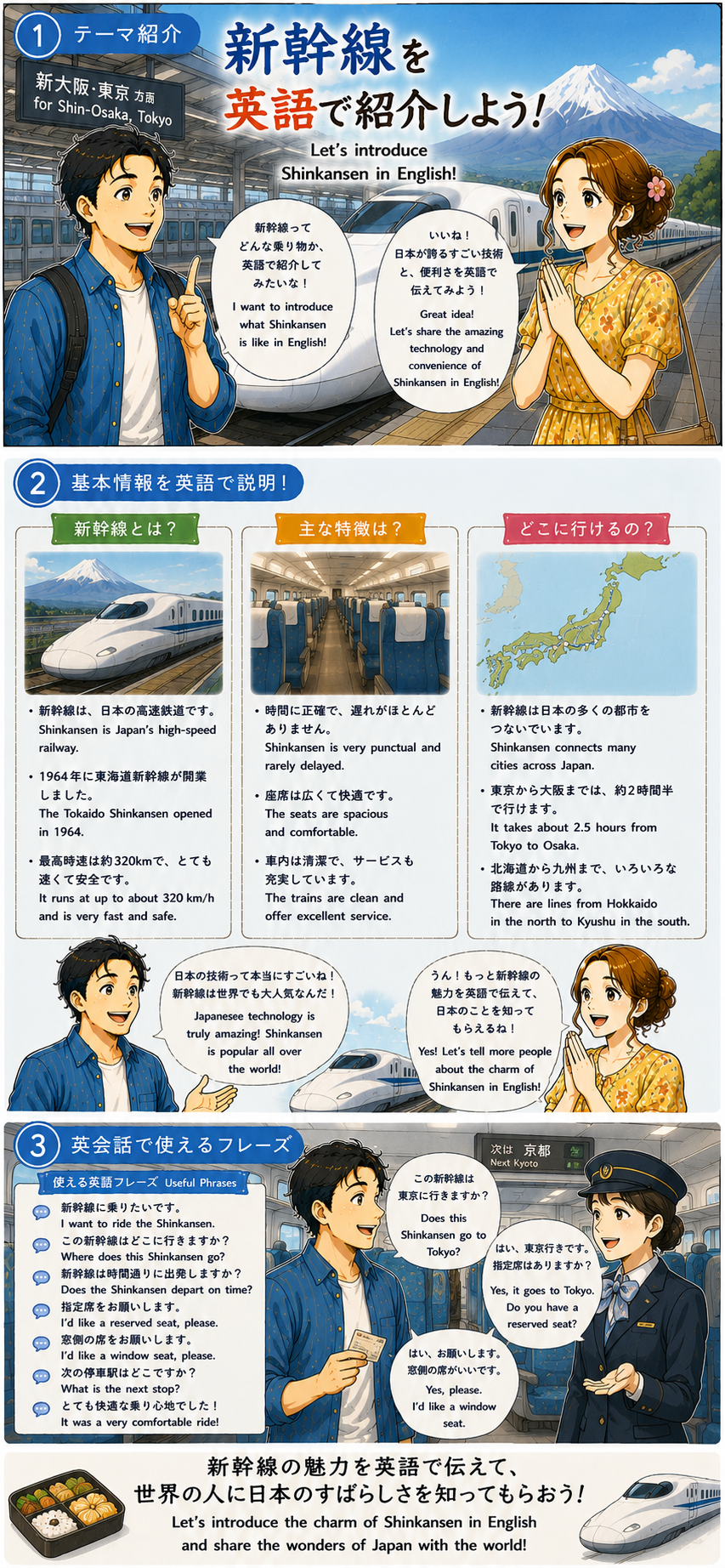
「Bullet Train」として世界に知られる 新幹線。1964年の開業以来60年、死亡事故ゼロ、平均遅延わずか24秒。この日本の誇りを英語で語れれば、海外講師は「日本は本当にすごい国だ」と感嘆するはずです。
英語では「Bullet Train」
“The Shinkansen is called ‘Bullet Train’ in English because of its bullet-like nose shape. The name has stuck since the 1960s.”
1964年、東京オリンピックで開業
“The Shinkansen debuted on October 1, 1964 — just 9 days before the Tokyo Olympics. It connected Tokyo and Osaka, cutting travel time from 7 hours to 4 hours.”
「東京オリンピックの9日前に開業」 という具体的な事実は会話を生き生きとさせます。
世界最速クラスの速度
| 系統 | 最高速度 | 区間 |
|---|---|---|
| 東海道 | 285 km/h | 東京-新大阪 |
| 山陽 | 300 km/h | 新大阪-博多 |
| 東北・北海道 | 320 km/h | 東京-新函館 |
| 北陸 | 260 km/h | 東京-金沢 |
“The fastest Shinkansen runs at 320 km/h. The maglev test version reached 603 km/h in 2015 — the world record.”
「603 km/h で世界記録」 という事実は、技術好きの講師に強く刺さります。

60年間で死亡事故ゼロ、平均遅延24秒
“Since 1964, the Shinkansen has carried over 10 billion passengers — with zero passenger fatalities from accidents. This is unprecedented in railway history.”
“The average delay of all Shinkansen trains is less than 24 seconds per train. If a train is more than 1 minute late, the conductor apologizes over the PA system.”
「100億人運んで死亡事故ゼロ」「1分遅れただけで車掌が謝罪」 は世界の鉄道史で類を見ません。
海外への影響と正確性の理由
“Many countries have tried to copy the Shinkansen — Taiwan, China, India. Taiwan’s high-speed rail uses Japanese Shinkansen technology directly.”
“Three reasons: dedicated tracks, extensive sensors monitoring everything, and 11-year training for drivers.”
「台湾はそのまま新幹線技術を採用」「専用線路+センサー網+11年訓練」の3要素で論理的に説明できます。
駅弁(Ekiben)文化
“A unique Shinkansen experience is ‘ekiben’ — station bento boxes. Each region has unique designs and local ingredients. It’s like a culinary tour of Japan.”
「駅弁(ekiben)」 は文化的体験として絶大な訴求力があります。
英会話で使えるフレーズ
- Shinkansen has run since 1964 — 1964年から運行
- Zero fatalities in 60 years — 60年間で死亡事故ゼロ
- Tokyo to Osaka takes 2.5 hours — 東京-大阪2時間半
「Shinkansen」は日本のテクノロジーと精密性のシンボル。データを引用しながら語れれば、海外講師は感嘆を漏らすはずです。


コメント