
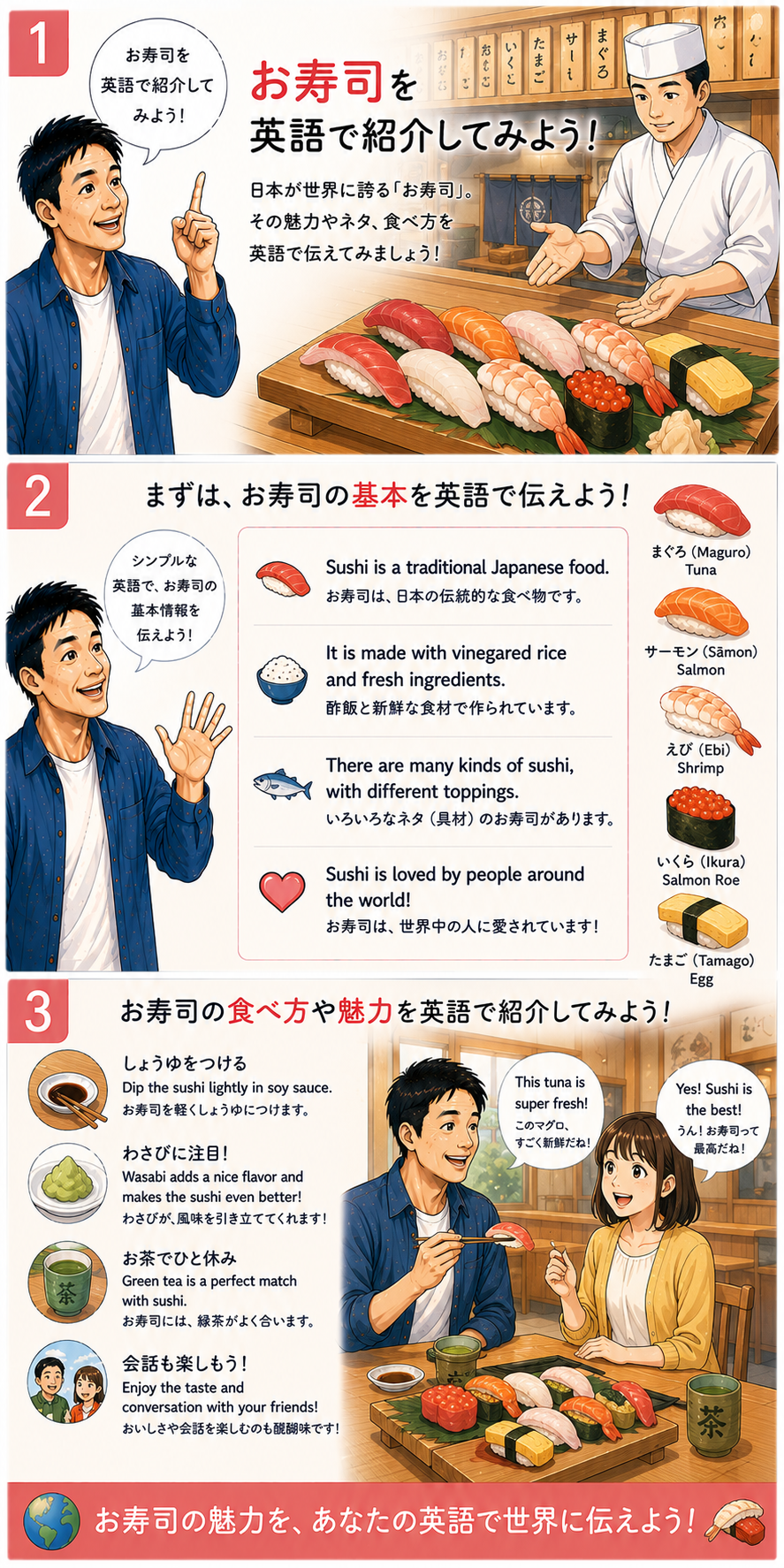
外国人講師との会話で「sushiとsashimiの違いって何?」と聞かれることは意外に多いです。海外では両方とも「日本の生魚料理」として扱われがちですが、実は別物。この記事では、英語で違いを説明するための要点を整理します。
一言で言うと: “Sushi has rice, Sashimi doesn’t”
“Sushi is vinegared rice topped with fish or other ingredients. Sashimi is just thinly sliced raw fish or seafood — no rice involved.”
「sushi=寿司」「sashimi=刺身」とそのまま英語化されていますが、海外の人にとっては定義がぼやけています。「rice or no rice」を軸に説明すると一発で伝わります。
Sushi(寿司)の英語説明
“The word ‘sushi’ actually refers to the rice, not the fish. The vinegar used to season the rice originated as a preservation method centuries ago.”
- Nigiri sushi: hand-pressed rice with a topping
- Maki sushi: rolled sushi with seaweed (nori)
- Chirashi sushi: scattered sushi served in a bowl
Sashimi(刺身)の英語説明
“Sashimi is considered one of the most refined forms of Japanese cuisine — the chef’s knife skills are everything, since there’s nothing to hide behind.”
提供されるのは魚だけでなく、馬肉(basashi)、鶏(tori sashi)、湯葉(yuba)など多様です。
マンツーマンなので確実に英語力アップ!オンライン英会話の【GLOBAL CROWN】
比較表で違いを整理
| 項目 | Sushi | Sashimi |
|---|---|---|
| Rice(米) | あり | なし |
| 主役 | 米と具材のバランス | 魚の鮮度と切り方 |
| 食べ方 | 箸でも手でもOK | 箸のみ |
| 醤油のつけ方 | ネタ側を軽く | 魚に直接 |
| 価格帯 | 比較的手頃 | 高級 |
英会話で使えるフレーズ
“The biggest difference is that sushi has rice, but sashimi is just the fish.”
“Sashimi is actually older than sushi. It’s all about the fish quality.”
“In Japan, we usually eat sashimi first, then sushi, when ordering both.”
“You should dip the fish side, not the rice side, into soy sauce.”
“Wasabi is already inside good nigiri sushi — you don’t need to add more.”
「魚側に醤油」「先に刺身、後に寿司」「良い握りには既にわさび入り」など、細かい知識が日本人の品格を表します。
コメント