
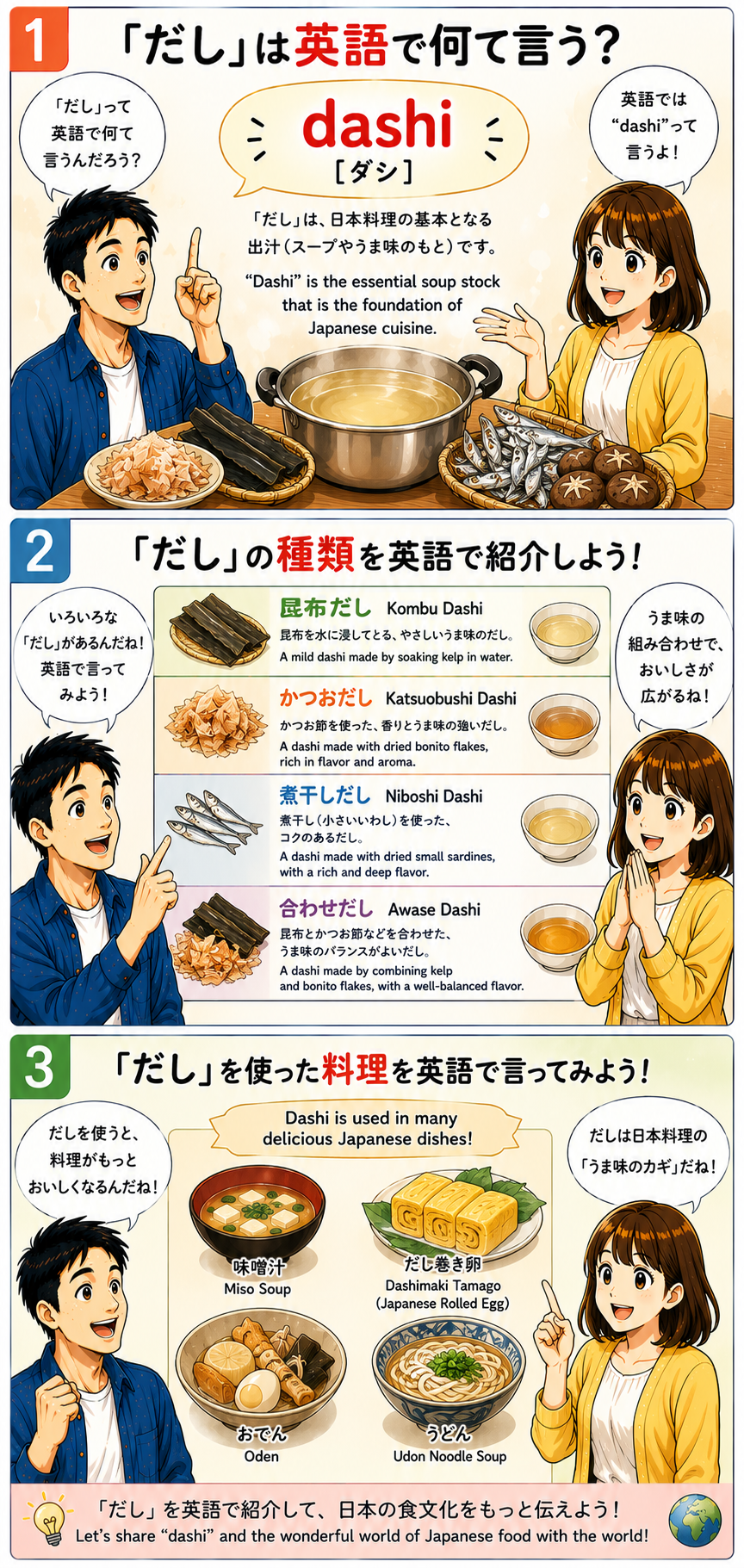
「日本料理が世界中で人気の理由は?」と外国人講師に聞かれたら、私は迷わず 出汁(dashi) の話をします。日本料理の奥深さを支える、目に見えない主役。今回は英語で伝えるポイントを整理します。
“Dashi” の世界的な認知度
意外なことに “dashi” は、今や英語圏のシェフの間でも普通に使われる言葉になっています。
“Dashi is the foundation of Japanese cuisine. It’s a simple broth, but the depth of flavor is what makes Japanese food unique.”
「日本料理の土台(foundation)」というキーワードで、講師の興味を引きます。
“Umami” は日本人が発見した第五の味
味覚は4つ(甘・酸・塩・苦)とされてきましたが、“umami” という第5の味を発見したのは日本人です。
“In 1908, a Japanese scientist discovered ‘umami’ — the fifth basic taste. It’s the savory, deep flavor found in dashi, tomatoes, cheese, and many other foods.”
「Umami」という日本語が、世界の科学用語として使われている事実は、誇らしい話題です。
出汁の3大材料
日本の出汁は主に3つの材料から作られます。
| 材料 | 英語表現 |
|---|---|
| 昆布 | kombu (kelp) |
| かつお節 | katsuobushi (bonito flakes) |
| 干し椎茸 | dried shiitake mushrooms |
“Traditional dashi is made from kombu (a type of seaweed), katsuobushi (dried bonito flakes), and dried shiitake mushrooms. Each gives a different flavor.”
話せなくてもOK。ゼロから始めるオンライン英会話【Aleva(アレバ)】
かつお節は「世界最も硬い食品」
“Katsuobushi is famously known as the hardest food in the world. It’s made by smoking and drying bonito fish for months.”
「世界一硬い食品」と聞いて、海外講師は必ず驚きます。
出汁が支える日本料理
“Almost every Japanese dish uses dashi — miso soup, udon noodle soup, simmered vegetables, even tamago-yaki (rolled omelet).”
味噌汁、うどん、煮物、卵焼き…日常のあらゆる料理に出汁が使われていると伝えると、講師は日本料理への見方が変わります。
「出汁を引く」という表現
日本では出汁を「取る」ではなく「引く(hiku)」と言います。
“We don’t say ‘make dashi.’ We say ‘pull out dashi’ — gently drawing out the flavor without forcing it.”
「無理せず、優しく引き出す」という日本料理の哲学が伝わる表現です。
簡単な出汁の作り方を紹介
“Easy method: Soak a piece of kombu in water for 30 minutes. Heat it slowly. Just before it boils, remove the kombu. Add katsuobushi, let it sit for 1 minute, then strain. That’s basic dashi.”
「家でも作れるんだ」と知ると、海外講師が日本料理にチャレンジしたくなります。これで和食編は完結。次は東京観光編、浅草から始めます。
コメント