
📕 『日本語がわかればできる英会話講座 大人のための実践学』を見る — 外国人講師に日本文化を語れる大人のための実践英会話講座
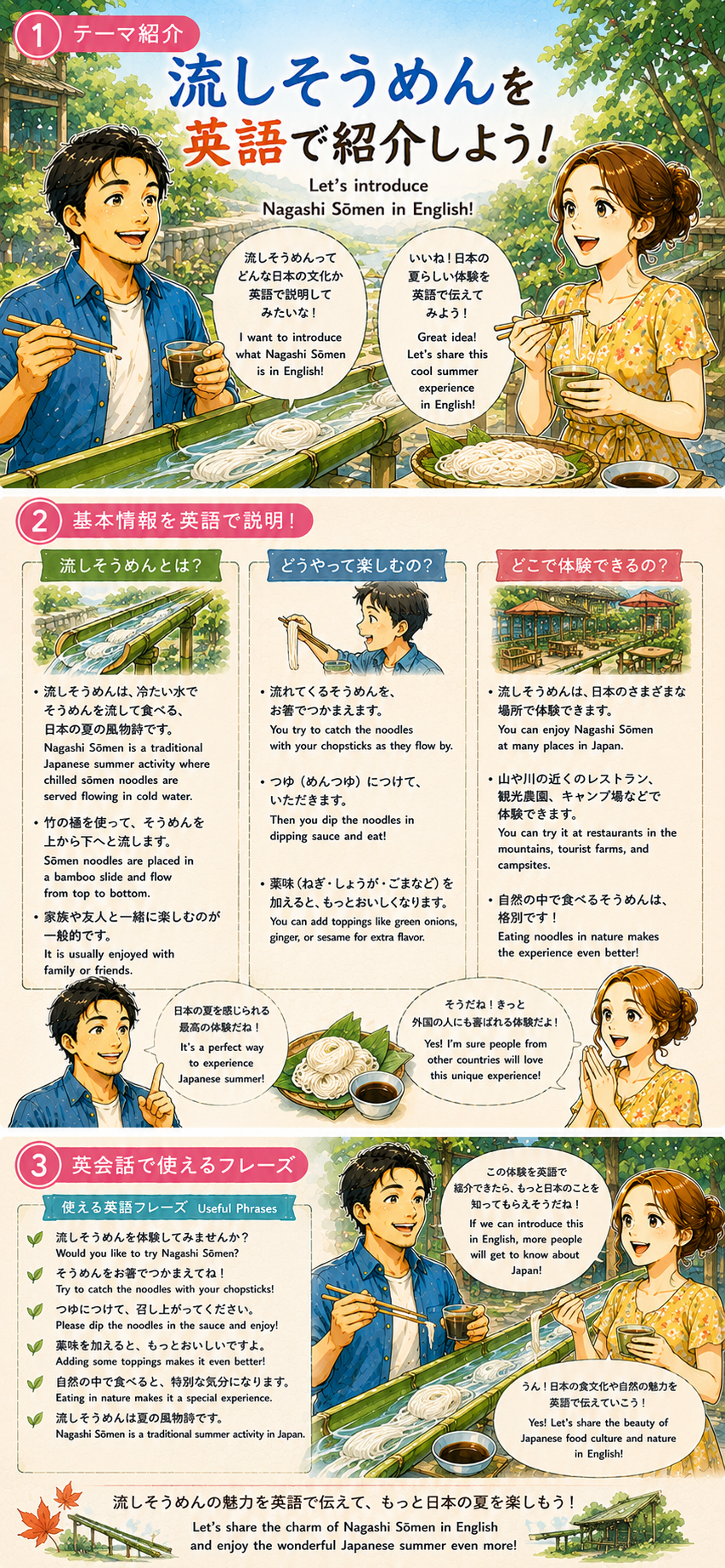
竹の樋を流れる素麺を箸でキャッチする 流しそうめん。海外で「Flowing Noodles」として動画がバズり、外国人観光客の体験スポットとして人気急上昇中です。この日本独自の食文化を英語で説明できれば、海外講師との会話は一気に盛り上がります。
流しそうめんは英語で「Nagashi Somen」
結論から言うと、流しそうめんは英語で Nagashi Somen または “flowing noodles” と呼ばれます(直訳すると「流れる麺」)。
“How do you say nagashi somen in English?” “It’s Nagashi Somen — flowing noodles you catch with chopsticks.”
(「流しそうめんって英語で何て言うの?」「Nagashi Somen、箸でキャッチする流れる麺だよ」)
夏限定の体験型グルメとして、海外でも動画がバズっている食文化です。
※「流しそうめん」「流し素麺」どちらの表記も使われていて、英語表記は同じく Nagashi Somen です。
「Flowing Noodles」=夏の暑さ対策
“Nagashi somen literally means ‘flowing noodles.’ Thin wheat noodles flow down a bamboo chute with cold water, and you catch them with chopsticks before they reach the end.”
“Somen noodles are served cold, making them perfect for Japan’s hot, humid summers. The flowing water adds extra cooling.”
「Flowing Noodles」という直訳と「夏の暑さ対策」という機能性で、文化的合理性が一発で伝わります。
流しそうめんの仕組み
| 要素 | 英語表現 |
|---|---|
| 竹の樋 | bamboo chute |
| 冷水 | cold water |
| 素麺 | thin wheat noodles |
| つゆ | dipping sauce (tsuyu) |
“The setup uses a long bamboo chute, often 5-10 meters long. Cold water flows continuously, carrying small bundles of somen noodles.”
そうめん vs 流しそうめん — 海外の人が混同しやすいポイント
海外の友人と話していて、「Sōmen と nagashi sōmen って同じもの?」と聞かれたことがあります。混乱しやすいのですが、違いは「料理 vs 食べ方」の差です。
Sōmen is the noodle itself. Nagashi sōmen is the way you eat it — catching the noodles as they flow down a bamboo slide.(そうめんは麺そのもの。流しそうめんは、竹の樋を流れてくる麺をすくって食べる「食べ方」のことです。)
麺の正体は同じです。違うのは「夏の屋外で、家族みんなで “Catch!” と叫びながら食べる」という体験そのもの。レストランで一人で食べる sōmen と、流しそうめん台を囲んでワイワイ食べる nagashi sōmen では、相手が想像する絵がまったく違います。
It’s less about the noodles and more about the experience.(麺そのものというより、体験そのものを楽しむ料理です。)
発祥は宮崎県、1955年
“Nagashi somen was invented in 1955 in Takachiho, Miyazaki Prefecture. Workers were eating somen with cold spring water during a hot summer break, and they invented this fun way to share it.”
食べ方とキャッチのコツ
“You stand on both sides of the chute, catch noodles with your chopsticks, then dip them in ‘tsuyu’ and eat quickly.”
“The trick is to position your chopsticks slightly downstream, then scoop upward.”
「下流側に箸を構えて、すくい上げる」というコツを伝えると、講師に「やってみたい!」と思わせます。
海外でバズった理由と体験スポット
“Nagashi somen went viral on YouTube and TikTok. Many foreigners say it’s ‘the most fun way to eat noodles in the world.'”
“Kibune in Kyoto is famous for nagashi somen served right above a mountain stream — incredibly refreshing.”
「世界一楽しい麺の食べ方」という海外の評価と「京都・貴船の川床」の情景は強く印象に残ります。
FAQ — 海外の人によく聞かれること
Q1. 家でもできるの?
できます。市販の流しそうめんマシン (回転式の卓上タイプ) が普及していて、子供向けのおもちゃ売り場でも見かけます。
You can buy a tabletop machine that recreates the bamboo flow at home.(家庭用の卓上マシンが売られていて、竹の樋を再現できます。)
Q2. 子供がいるけど安全?
熱湯を扱うわけではないので比較的安全ですが、屋外で本格的な竹の樋を使う場合は、子供は端でキャッチ役にすると安心です。
Kids usually love standing at the end of the slide and catching the noodles with their chopsticks.(子供たちはたいてい、樋の一番下で麺を箸でキャッチする役を喜びます。)
Q3. 流れずに残った麺は?
最後はみんなで一気に流して終わるのが定番です。「ラストラン」と呼ぶ家もあります。
The very last batch is called the “last run” — everyone gets ready and tries to catch it all.(最後の一回は「ラストラン」と呼ばれて、みんなで構えて取り合います。)
英会話で使えるフレーズ
- Nagashi somen means “flowing noodles” — 流れる麺
- You catch noodles with chopsticks — 箸で麺をキャッチ
- It started in Miyazaki in 1955 — 1955年宮崎で始まりました
「Nagashi Somen」は日本の夏文化のエンタメ性を象徴する食べ方。英語で語れる日本人は希少です。
夏の風物詩としてセットで語れるトピックも、Nihon Talk でカバーしています。あわせてどうぞ。

コメント