
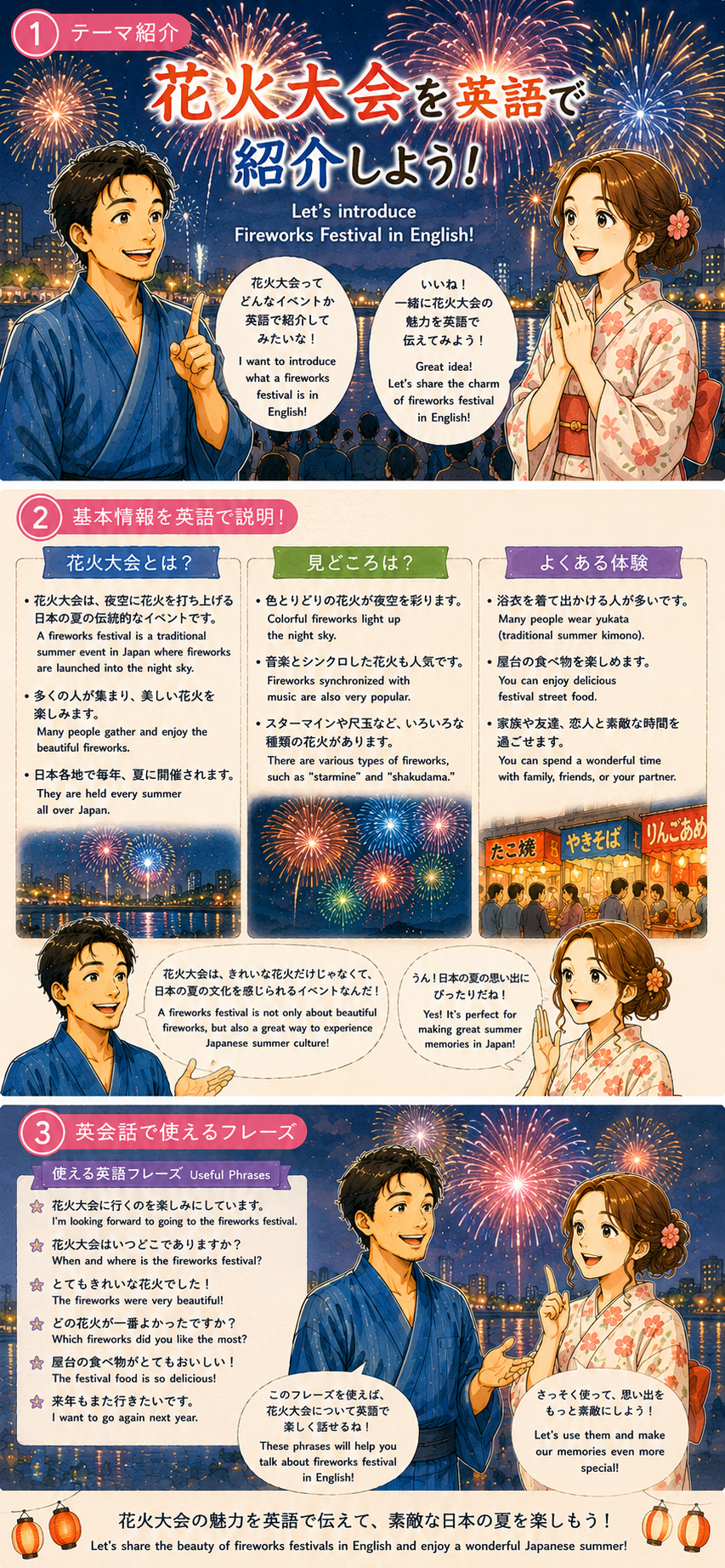
日本の夏といえば 花火大会。実は日本の花火は 世界最高峰の技術 として知られていて、海外の花火と一線を画す存在です。この日本独自の花火文化を英語で説明できれば、海外講師に「夏に絶対行きたい」と思わせる強力なトピックになります。
Hanabi = 「火の花」
“Hanabi literally means ‘fire flower.’ Each firework is designed to bloom and fall like a flower, which is a uniquely Japanese aesthetic.”
日本の花火は世界一?
“Japanese fireworks are considered the world’s best in terms of perfect roundness, color, and timing. Japanese hanabi are like art pieces.”
「丸さ・色・タイミングが世界一」 という事実は意外性があり、海外講師に強くアピールできます。
江戸時代に始まった
“Fireworks displays in Japan started in 1733 during the Edo period — as a memorial for plague victims and famine sufferers. So hanabi has always had a spiritual meaning.”
「もとは疫病と飢饉の犠牲者を悼む儀式」 という起源で、花火の精神性が一気に深まります。
数字で見る日本の花火大会
| 花火大会 | 場所 | 規模 |
|---|---|---|
| 隅田川花火大会 | 東京 | 約20,000発・観客100万人 |
| 長岡まつり大花火大会 | 新潟 | 約20,000発・3尺玉(650m) |
| 大曲の花火 | 秋田 | 約18,000発・職人競技会 |
| PL花火大会 | 大阪 | 約20,000発・豪華フィナーレ |
“Major festivals launch about 20,000 fireworks in 90 minutes, drawing crowds of over 1 million people.”

3尺玉と花火職人の世界
“Nagaoka’s ‘san-shaku-dama’ is one of the world’s largest fireworks — 90 cm in diameter, exploding into a 650-meter-wide flower in the sky.”
“Hanabi-shi (firework artisans) train for over 10 years. They compete in events like Omagari, where the best craftsmen show off their newest designs.”
「直径90cm、空で650m」「10年以上の修行」という事実は、花火好きの講師に刺さります。
浴衣・屋台と西洋の花火との違い
“People wear yukata, eat festival food like takoyaki and yakisoba, and watch fireworks with family and friends. It’s the quintessential Japanese summer experience.”
“Western fireworks focus on grand finale and synchronized music. Japanese hanabi focus on the beauty of each single flower — slow, deliberate, almost meditative.”
「浴衣+屋台+花火」の3点セットと、「グランドフィナーレ重視の西洋 vs 一発一発の美しさ重視の日本」という対比は、文化の違いを見事に表現します。
英会話で使えるフレーズ
- Hanabi means “fire flower” — 花火は「火の花」を意味します
- Japanese fireworks are the world’s best — 日本の花火は世界最高です
- We wear yukata to watch fireworks — 花火を観るときは浴衣を着ます
「Fireworks Festival」は 日本の夏の代名詞。世界一の技術と起源を語れれば、海外講師は「日本の夏に行きたい」と確信するはずです。
コメント